.svg)

Many women going through perimenopause or menopause are familiar with bioidentical hormone replacement therapy (BHRT). They may already be using an estradiol patch or cream, progesterone capsules, or testosterone to help manage symptoms such as hot flashes, poor sleep, low energy, and changes in sexual function.
But there's another approach to hormone therapy that most women have never heard of. It's called rhythmic hormone therapy, and it attempts to more closely mimic the natural hormonal fluctuations that occur during a woman's monthly menstrual cycle.
Both approaches can use the same hormones. The difference is how those hormones are administered.
What Does Bioidentical Hormone Therapy Mean?
Bioidentical hormones are hormones that have the same molecular structure as those naturally produced by the human body.
For women, these typically include:
- Estradiol: The primary estrogen produced during the reproductive years. It plays an important role in bone health, temperature regulation, vaginal health, and many other functions.
- Progesterone: Helps regulate the menstrual cycle, supports the uterine lining, and plays a role in reproductive function.
- Testosterone: Although commonly associated with men, women also produce testosterone. It contributes to sexual function and other aspects of health.
Bioidentical hormones are different from certain synthetic hormones, such as medroxyprogesterone acetate, which acts on progesterone receptors but is not chemically identical to natural progesterone.
An important point is that bioidentical hormones can be custom made at a compounding pharmacy or there are FDA-approved estradiol patches and oral micronized progesterone.
However, the term bioidentical only describes the hormone itself. It doesn't tell us how much is being used, how it's administered, or how frequently the dose changes.
How Do Hormones Normally Change Throughout the Month?
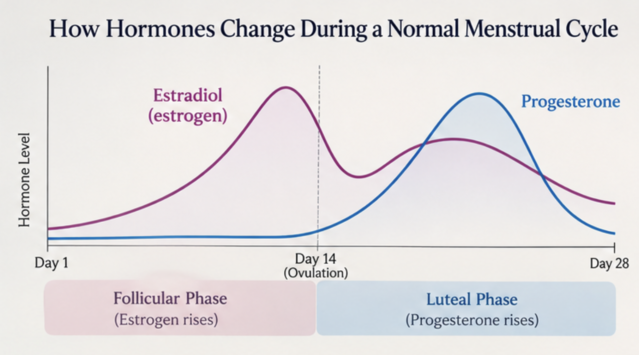
Before menopause, estrogen and progesterone levels are constantly changing throughout the menstrual cycle.
During the first half of the cycle, estradiol gradually increases as the body prepares for ovulation. Estradiol typically reaches its highest level shortly before ovulation.
After ovulation, progesterone rises significantly while estradiol continues to fluctuate. If pregnancy doesn't occur, both hormones decline toward the end of the cycle.
These changes are a normal part of female reproductive physiology.
The important point is that a woman's hormones don't remain at the same level every day. They rise and fall throughout the month.
After menopause, the ovaries produce less and less of estradiol and progesterone. This eventually leads to inconsistent and intermittent monthly cycles until they stop completely.
What Is Rhythmic Hormone Therapy?
Rhythmic hormone therapy is an approach designed to more closely mimic the natural fluctuations of estradiol and progesterone seen before menopause.
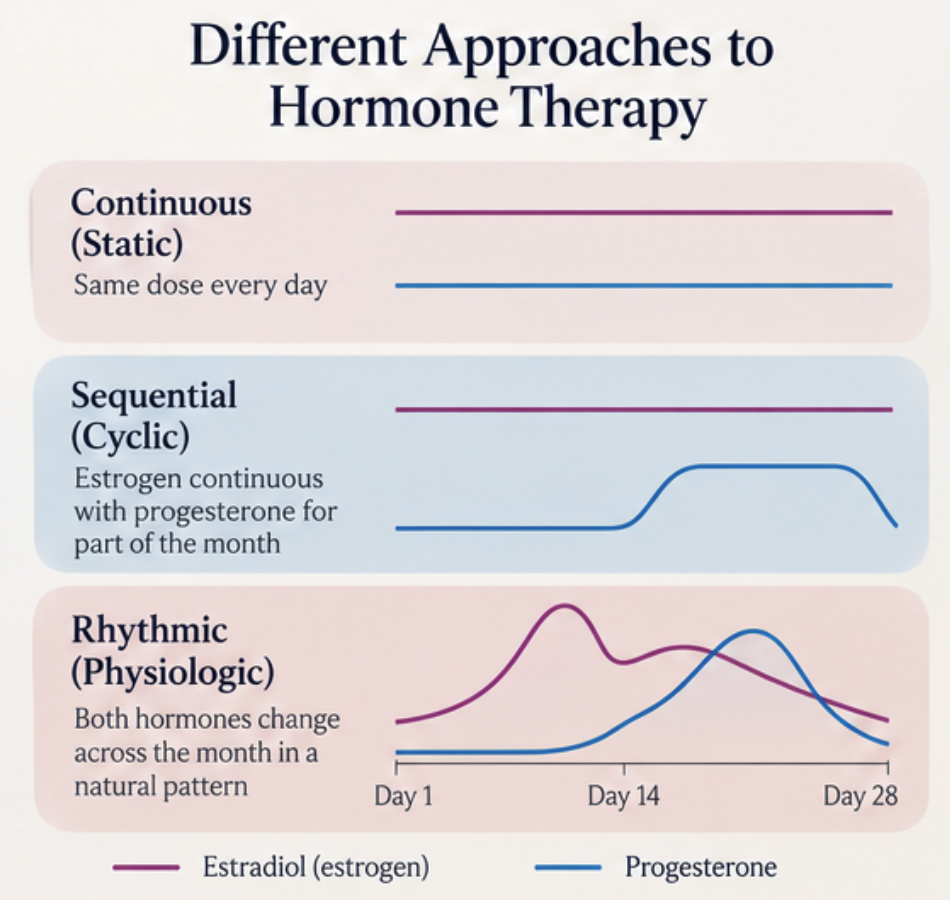
Instead of giving the same hormone dose every day, the amount of hormone administered changes throughout an approximately 28-day schedule.
For example, estradiol dosing may gradually increase during the first half of the cycle, decrease around the time ovulation would normally occur, and then follow a different pattern during the second half.
Progesterone is generally introduced during the latter half of the cycle and then discontinued before the next cycle begins.
The idea is to recreate some of the hormonal patterns that occur naturally during a woman's reproductive years.
This approach is sometimes referred to as physiologic hormone restoration therapy.
It is important to understand that reproducing a hormone dosing pattern does not necessarily recreate all the biological processes of a functioning ovary.
How Is This Different from Traditional Hormone Replacement?
Most conventional hormone replacement treatments are designed to provide relatively consistent hormone exposure.
For example, a woman may use the same strength estradiol patch or cream throughout the month and take progesterone every evening.
Another common approach is to use estradiol continuously while taking progesterone for approximately 12–14 days each month. This is known as sequential or cyclic hormone therapy.
Both approaches are well established options for hormone replacement.
Rhythmic therapy is different because the estrogen dose itself changes throughout the month, along with the timing of progesterone.
The goal is not simply to replace hormones but to reproduce a more natural pattern of hormonal exposure.
Why Might Hormone Timing Matter?
Hormones work by attaching to receptors in different tissues throughout the body.
These receptors are not completely static. Their activity and expression can change depending on hormone exposure and the tissue involved.
For example, estradiol helps regulate progesterone receptor expression in reproductive tissues. This is one reason the timing of estrogen and progesterone is important during a normal menstrual cycle.
Supporters of rhythmic hormone therapy believe that reproducing these changes may provide a more physiologic response rather than maintaining constant hormone levels.
It's an interesting concept, and there is a biological reason to study it.
However, receptor activity varies between tissues, and we cannot assume that recreating a menstrual hormone pattern will automatically improve health outcomes after menopause.
Is Rhythmic Hormone Therapy Better?
This is where we need to separate what we understand about hormone physiology from what clinical research has actually shown us.
We know that estradiol and progesterone fluctuate during the reproductive years. We also know that hormone receptors respond to changes in hormone exposure.
What we don't currently have is strong clinical data showing that rhythmic hormone therapy is safer or more effective than existing hormone replacement methods.
There are no large studies or clinical trials showing that rhythmic dosing provides better protection against cardiovascular disease, osteoporosis, dementia, or other long-term health conditions.
We also don't know whether recreating higher premenopausal hormone levels after menopause provides any additional benefits or increases in certain risks.
That doesn't mean rhythmic therapy doesn’t have potential. It means more research is needed.
Choosing the Right Hormone Therapy
At Transformyou, we believe hormone therapy should be individualized.
A woman's age, symptoms, medical history, menopausal status, lab findings, and response to treatment all help guide decisions.
For some women, a consistent estradiol dose combined with appropriate progesterone works very well. Others may benefit from adjustments in hormone dose, delivery method, or progesterone schedule.
The goal is to improve symptoms and quality of life while carefully considering the benefits and risks of treatment.
More hormone is not necessarily better, and a treatment that appears more natural is not automatically safer or more effective.
Understanding how hormones work is important, but so is understanding what the research supports.
Frequently Asked Questions
Is bioidentical hormone therapy the same as rhythmic hormone therapy?
No. Bioidentical describes the molecular structure of the hormones being used. Rhythmic describes how hormone doses change throughout the month. A woman can use bioidentical hormones without following a rhythmic schedule.
Do women need to cycle their hormones after menopause?
Not necessarily. After menopause, the ovaries no longer follow a regular reproductive cycle. Many women experience significant improvement with continuous hormone replacement, and there is no established evidence that recreating a monthly cycle is necessary for better health.
Is progesterone better when taken only part of the month?
Both continuous and cyclic progesterone regimens are used in menopause treatment. The appropriate schedule depends on several factors, including the estrogen dose, whether a woman has a uterus, bleeding patterns, and treatment tolerance. Women with a uterus taking systemic estrogen generally require adequate endometrial protection.
Can rhythmic hormone therapy improve energy, sleep, or brain fog?
Hormone therapy can improve certain menopause-related symptoms, particularly hot flashes and night sweats that interfere with sleep. However, there is not enough clinical evidence to determine whether rhythmic dosing improves energy, sleep, or cognitive symptoms more effectively than conventional hormone replacement.
Are compounded bioidentical hormones better than FDA-approved hormones?
Both compounded and FDA-approved bioidentical hormones are available. At Transformyou, we prefer compounded hormones because they give us greater flexibility in dosing and allow us to customize treatment to each patient's individual needs. FDA-approved hormones come in specific doses and formulations, which may not always provide the flexibility we're looking for. Compounded hormones allow us to make smaller, more precise adjustments based on a woman's symptoms, hormone levels, and response to treatment. While compounded medications do not undergo the same FDA approval process as commercially available products, we believe the ability to individualize treatment is an important advantage for our patients.
Should every woman have hormone levels restored to premenopausal levels?
No. Hormone treatment should not be based solely on reaching a particular laboratory number. Symptoms, clinical response, medical history, and safety are important considerations. Higher hormone levels do not automatically translate into better results.
Final Thoughts
Rhythmic hormone therapy is an interesting approach because it raises an important question: Does the timing of hormone exposure matter as much as the hormone itself?
We know hormone levels naturally fluctuate throughout a woman's reproductive years. What remains unclear is whether recreating those fluctuations after menopause provides meaningful advantages over established hormone replacement therapy.
As research continues, our understanding of hormone treatment will continue to evolve.
At Transformyou, we focus on helping women navigate perimenopause and menopause with individualized hormone treatment. We look at the entire picture, including symptoms, hormone levels when appropriate, metabolic health, and overall well-being, to develop a treatment plan that makes sense for each patient.
Read next in Progesterone