.svg)
When you think about healthy fats, omega-3s, fish oil, and avocado or olive oils probably come to mind. But there is another type of fat that plays an important role in the health of your brain and cell membranes and most people have never heard of it.
It's called a plasmalogen.
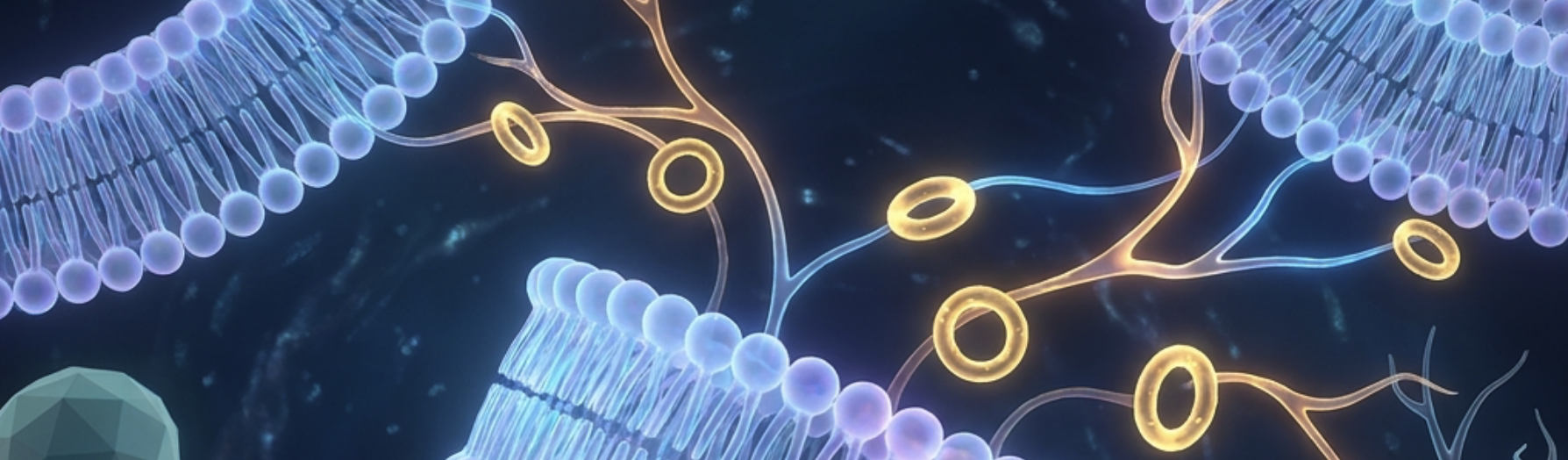
Plasmalogens are specialized fats that make up part of the membranes that surround your cells. They are found throughout the body but are especially concentrated in the brain, nervous system, heart, and muscles.
Why are we paying attention to them in longevity medicine? Because research suggests plasmalogen levels can change as we age, and lower levels have been associated with cognitive decline, Alzheimer's disease, cardiovascular disease, metabolic dysfunction, and other chronic health conditions.[1,2]
That doesn't mean low plasmalogen levels cause these conditions. But it does raise the question. Could maintaining healthier plasmalogen levels protect our brain and cells as we get older?
What Are Plasmalogens?
Every cell in your body is surrounded by a membrane. Think of that membrane as the protective outer layer of the cell.
Healthy cell membranes help your cells:
- communicate with one another
- move nutrients in and out
- respond to hormones and other signals
- regulate inflammatory responses
- maintain normal cellular function
Plasmalogens are specialized phospholipids, a unique type of fat used to build these membranes.[1,3] They are abundant in the brain and nervous system. This is where healthy membranes are critical for communication between nerve cells. Plasmalogens are also an important part of myelin, the protective insulation surrounding many of our nerves.[1]
For this reason, researchers are interested in the relationship between plasmalogens, cognitive health, and aging.
What Are the Potential Benefits of Plasmalogens?
Brain and memory health: Plasmalogens help maintain the membranes surrounding brain cells and are important components of myelin, the protective covering around nerves.
Healthy cell membranes: They help keep cell membranes functioning properly, which is important for communication between cells, nutrient transport, and normal cellular signaling.
Protection from oxidative stress: Plasmalogens may help protect vulnerable cell membranes from some of the oxidative damage that happens with aging.
A balanced inflammatory response: Plasmalogens interact with inflammatory pathways and may play a role in maintaining healthier inflammatory signaling.
Cardiovascular and metabolic health: Plasmalogens are involved in lipid metabolism, and lower levels have been associated with cardiovascular disease, insulin resistance, and other metabolic conditions.
Healthy aging: Perhaps most importantly, plasmalogens support several basic processes that help keep our brain, nerves, and cells functioning normally as we get older.
Plasmalogens help create the cellular environment your brain, nerves, and other tissues need to function well. This is what makes plasmalogens so interesting when we think about longevity. They aren't connected to just one organ or one disease. They are part of the basic structure that help our cells function. Maintaining this environment becomes more important as we age.
Your Brain is Dependent on Healthy Fats
Your brain is one of the most fat-rich organs in your body. That fat isn't simply stored energy. Specialized fats are literally part of the physical structure of your brain. Plasmalogens are concentrated in the membranes surrounding neurons and in myelin, helping create the environment nerve cells need to communicate effectively.[3]
Researchers have repeatedly found lower plasmalogen levels in people with Alzheimer's disease and studies have also identified lower levels of certain plasmalogens in people with Parkinson’s Disease.[4,10,11,12] Some research has also found relationships between lower plasmalogen levels and greater cognitive impairment. This leads us to an obvious question:
Could restoring plasmalogens help support cognitive health?
Researchers are beginning to study this exact question. A 24-week randomized, double-blind, placebo-controlled trial evaluated scallop-derived plasmalogens in 328 adults with mild Alzheimer's disease or mild cognitive impairment.[5] Across the entire study population, plasmalogen supplementation did notsignificantly improve the primary cognitive outcome compared with placebo. Researchers did however find that memory improved in women and participants younger than 77 with mild Alzheimer's disease.[5]
Another randomized trial involving healthy adults with mild forgetfulness found that 12 weeks of plasmalogen supplementation produced improvements in composite memory scores compared with placebo.[6] Smaller human studies have also reported increases in circulating plasmalogen levels and possible improvements in cognition, mobility, concentration, and mood.[7,8]
These findings are encouraging. But we don’t want to make the assumption that plasmalogens have been proven to prevent or treat Alzheimer's disease.
Plasmalogens and Neurodegenerative Disease: What Do We Actually Know?
This is an important distinction because plasmalogens are increasingly being marketed as brain-health supplements. Studies consistently report that plasmalogen levels are lower in people with Alzheimer's while other human studies show lower levels of specific plasmalogens in Parkinson’s disease.[2,4,10,11]
Researchers are investigating several possible explanations involving:
- neuronal membrane health
- myelin integrity
- oxidative stress
- neuroinflammation
- communication between brain cells
- amyloid metabolism
A recent review of the research concluded that human studies show plasmalogen levels decline with age and that the reduction appears to be greater in Alzheimer's disease.[9] That's important. But association does not prove causation. We don't yet know whether declining plasmalogens contribute directly to Alzheimer's or Parkinson’s disease, occur because of the disease, or involve some combination of the two. We also don't have enough evidence to say that taking plasmalogens prevents Alzheimer's disease.
At TransformYou, I think this distinction matters. The goal isn't to turn every promising area of longevity research into the next miracle supplement. The goal is to understand the biology, evaluate the individual patient, and decide where something may fit within a much larger strategy for healthy aging.
Why Might Plasmalogen Levels Become Low?
Your body can manufacture plasmalogens but it requires several steps inside your cells. Healthy levels depend on your ability to produce, maintain, use, and replace them.
Several factors may influence this balance, including:
- aging
- genetics
- chronic inflammation
- oxidative stress
- metabolic dysfunction
- nutritional status
- certain diseases
- changes in the cellular machinery responsible for producing plasmalogens.[1,2]
This is an important point. Someone doesn't necessarily have lower plasmalogens because they aren't eating enough of a particular food. The issue may also involve how efficiently the body is producing and maintaining them.
Can You Get Plasmalogens from Food?
Yes.
Plasmalogens occur naturally in animal and marine foods, with varying amounts in foods such as:
- seafood
- shellfish
- fish
- meat
- eggs
- dairy products
Omega-3 fatty acids, choline, and other nutrients are also important for overall cell-membrane health. Nutrition is part of the foundation. But there is one thing to keep in mind. Eating healthy fats and restoring plasmalogen levels are not necessarily the same thing.
Researchers are now investigating both direct plasmalogen supplementation and plasmalogen precursors, compounds the body can use to help produce plasmalogens.[1,9]
How We Look at Plasmalogens at TransformYou
At TransformYou, we don't approach longevity by searching for one supplement that fixes everything. We look for patterns in how the body is aging. If someone is concerned about memory, brain health, metabolic health, inflammation, or simply wants to be proactive about aging, plasmalogens may be one piece of a much broader evaluation.
Depending on the individual, that may include looking at:
- cardiovascular risk
- insulin resistance and glucose control
- inflammatory markers
- hormone health
- thyroid function
- nutrient status
- body composition
- muscle mass
- sleep
- exercise
- cognitive and family history
For some patients, specialized lipid testing can provide information about plasmalogen levels. But a plasmalogen result shouldn't be interpreted by itself.
The better question is:
What is the rest of your biology telling us?
A person with low plasmalogens, poor insulin sensitivity, elevated inflammation, declining muscle mass, poor sleep, and cardiovascular risk needs a very different strategy than someone whose other markers look excellent.
Should You Supplement with Plasmalogens?
Maybe. Plasmalogen supplements and plasmalogen precursors are available, and early human research involving cognitive aging is interesting. I don't think everyone over 40 or 50 automatically needs a plasmalogen supplement. For the right person, plasmalogens may be one tool within a larger strategy designed to support brain and cellular health. That strategy still starts with the fundamentals:
Exercise. Maintain muscle. Sleep well. Eat well. Protect your metabolic health. Manage cardiovascular risk. Address hormone deficiencies when appropriate. And reduce chronic inflammation.
Supplements should support those foundations, not replace them.
Who Might Want to Learn More About Plasmalogens?
A conversation about plasmalogens may be worth considering if you are:
- interested in maintaining memory and cognitive performance as you age
- noticing changes in cognitive function
- concerned about a family history of cognitive decline
- interested in proactive brain-health strategies
- dealing with metabolic or inflammatory issues
- interested in a more comprehensive longevity evaluation
The decision to test or supplement should still be individualized. Sometimes supplementation may make sense. Other times, there may be much more important issues to address first.
Frequently Asked Questions About Plasmalogens
What are plasmalogens?
Plasmalogens are specialized fats that form part of the membranes surrounding your cells. They are particularly abundant in the brain, nervous system, heart, and other metabolically active tissues.
What do plasmalogens do?
Plasmalogens help support cell-membrane structure, nerve and brain health, myelin, cellular communication, and processes involved in oxidative stress and inflammation.[1,3]
Do plasmalogens decline with age?
Research suggests plasmalogen levels and metabolism change with aging. Lower levels have also been observed in several age-related diseases, particularly Alzheimer's disease and other neurodegenerative conditions.[1,9,10,11]
Are low plasmalogens associated with Alzheimer's & Parkinson’s disease?
Yes. Multiple studies have found lower plasmalogen levels in people with Alzheimer's and Parkinson’s disease.[4,9,10,11,12] However, lower levels do not prove that plasmalogen deficiency causes these diseases.
Can plasmalogens prevent Alzheimer's or Parkinson’s disease?
We don't currently have enough evidence to say that plasmalogen supplementation prevents Alzheimer's or Parkinson’s disease. Human studies on plasmalogens and cognitive function have produced positive results, but larger, longer studies are still needed.[5,7,12]
Can plasmalogens help with memory?
Possibly. Several human studies have reported improvements in certain measures of memory or cognition following plasmalogen supplementation. However, results have not been consistent across every population or every cognitive measurement.[5-7]
Can plasmalogen levels be tested?
Yes. Specialized lipid testing can measure plasmalogen-related markers in the blood. We like to interpret those results with metabolic, cardiovascular, inflammatory, hormonal, nutritional, and lifestyle factors rather than treating the plasmalogen numbers by themselves.
Are plasmalogens the same as fish oil?
No. Fish oil primarily provides the omega-3 fatty acids EPA and DHA. Plasmalogens are specialized phospholipids incorporated into cell membranes. Both may be relevant to brain health, but they are different compounds with different biological roles.
The Takeaway
Plasmalogens aren't simply another new supplement. They are already part of you. They help form the membranes surrounding your cells and are found in high concentrations in the brain and nervous system.
Research suggests plasmalogen levels change with aging. Lower levels are well documented in Alzheimer's disease and emerging research has found plasmalogen abnormalities in Parkinson’s disease. Early research also suggests that restoring plasmalogen levels may have benefits for cognitive health. For me, the bigger lesson is what plasmalogens teach us about aging. Healthy aging isn't simply about whether your standard lab results fall inside a reference range. It's about maintaining the systems that allow your brain, metabolism, muscles, heart, and cells to continue functioning well over time.
At TransformYou, our goal isn't simply to help you live longer. It's to help you protect the strength, metabolic health, cognitive function, and independence that determine how well you live those years. And sometimes that requires looking beyond the standard labs and asking a more important question:
How well is your body actually aging?
References
1. Paul S, Lancaster GI, Meikle PJ. Plasmalogens: A potential therapeutic target for neurodegenerative and cardiometabolic disease. Progress in Lipid Research. 2019;74:186-195. View on PubMed
2. Plasmalogens as biomarkers and therapeutic targets. Review of clinical evidence examining plasmalogens in neurological, cardiovascular, metabolic, inflammatory, and systemic disease. View on PubMed
3. Hossain MS, Mawatari S, Fujino T. Biological Functions of Plasmalogens. Advances in Experimental Medicine and Biology. 2020;1299:171-193. View on PubMed
4. Su XQ, Wang J, Sinclair AJ. Plasmalogens and Alzheimer's disease: a review. Lipids in Health and Disease.2019;18:100. View on PubMed
5. Fujino T, Yamada T, Asada T, et al. Efficacy and Blood Plasmalogen Changes by Oral Administration of Plasmalogen in Patients with Mild Alzheimer's Disease and Mild Cognitive Impairment: A Multicenter, Randomized, Double-blind, Placebo-controlled Trial. EBioMedicine. 2017;17:199-205. View on PubMed
6. Watanabe H, Okawara M, Matahira Y, et al. The Impact of Ascidian (Halocynthia roretzi)-derived Plasmalogen on Cognitive Function in Healthy Humans: A Randomized, Double-blind, Placebo-controlled Trial. Journal of Oleo Science. 2020. View on PubMed
7. Goodenowe DB, Haroon D, Kling MA, et al. Targeted Plasmalogen Supplementation: Effects on Blood Plasmalogens, Oxidative Stress Biomarkers, Cognition, and Mobility in Cognitively Impaired Persons. 2022. View on PubMed
8. Fujino M, Fukuda J, Isogai H, et al. Orally Administered Plasmalogens Alleviate Negative Mood States and Enhance Mental Concentration: A Randomized, Double-Blind, Placebo-Controlled Trial. Frontiers in Cell and Developmental Biology. 2022;10:894734. View on PubMed
9. Zhang Y, Chen J, Jiang J, et al. Plasmalogens in Alzheimer's Disease: A Narrative Review of Dietary Sources, Metabolism, and Neuroprotective Mechanisms. Journal of Agricultural and Food Chemistry.2026;74(25):19375-19392. View on PubMed
10. Mawatari S, et al. Improvement of Blood Plasmalogens and Clinical Symptoms in Parkinson's Disease by Oral Administration of Ether Phospholipids: A Preliminary Report. Parkinson's Disease. 2020. View on PubMed
11. Chang KH, et al. Alterations of Sphingolipid and Phospholipid Pathways and Ornithine Level in the Plasma as Biomarkers of Parkinson's Disease. Cells. 2022. View on PubMed
12. Senanayake V., Goodenowe D. B. Plasmalogen Deficiency and Neuropathology in Alzheimer's Disease: Causation or Coincidence? Alzheimer's & Dementia. 2019 View on PubMed
Read next in Anti-Aging Medicine


Written by
Dr. Robb Bird
Medically reviewed by Dr. Robb Bird, NMD FAARM
Medical Director, Transformyou